
9 Genius Long Flight Hacks You Will Wish You Knew Sooner
Master the Long Haul: 9 Expert-Tested Hacks for a Stress-Free Flight
Anyone who has spent 12 or more hours in a pressurized metal tube knows that long-haul flying is as much a mental game as it is a physical one. Whether you are crossing the Atlantic or heading to Asia, the goal isn’t just to arrive—it’s to arrive feeling human. After years of navigating global flight paths and testing every gadget and routine available, I’ve learned that the difference between a miserable flight and a manageable one lies in the details.
Most travel advice tells you to “wear comfortable clothes” or “drink water.” While true, those are basics, not hacks. To truly optimize your experience, you need a strategy that addresses the physiological and psychological toll of long-distance travel. Here are nine genius hacks to transform your next long flight.
1. Implement the “Block Scheduling” Method
The biggest psychological hurdle of a long flight is the feeling of endless time. When you keep checking the flight tracker, the hours drag. Instead, divide your flight into “blocks” of activity. For example:
- Block 1 (Takeoff to Meal): Administration and entertainment (emails, organizing photos, one movie).
- Block 2 (Post-Meal): Deep rest or sleep.
- Block 3 (Mid-Flight): Learning or reading (a book, a podcast, or a language app).
- Block 4 (The Final Stretch): Grooming and light entertainment.
By treating the flight as a series of small goals rather than one giant stretch of time, you eliminate the “how much longer?” anxiety.
2. The Strategic Layering System (Merino Wool is Key)
Airplane cabin temperatures are notoriously inconsistent—freezing one hour and stifling the next. The mistake most travelers make is wearing a heavy hoodie. Instead, use a three-layer system centered around Merino wool. Unlike cotton, Merino is antimicrobial (it won’t smell after 14 hours) and regulates temperature naturally.
Pair a lightweight Merino base layer with a breathable mid-layer and a large, oversized scarf or shawl. A high-quality shawl doubles as a blanket, a lumbar support pillow, or a modesty cover if you’re trying to sleep in an awkward position.
3. Combat “Desert-Air” Dehydration
Cabin humidity often drops below 20%, which is drier than some deserts. This leads to “plane brain” (brain fog) and irritated sinuses. While drinking water is essential, internal hydration isn’t enough.
The Pro Hack: Use a simple saline nasal spray every 3–4 hours. Keeping your nasal passages moist prevents the dry-cracking that often leads to post-flight colds. Combine this with a heavy-duty, fragrance-free moisturizer applied just before sleep to create a barrier against the drying air.
4. The Anti-Bloat Nutrition Strategy
The change in air pressure causes the gas in your intestines to expand, leading to that uncomfortable, bloated feeling. To mitigate this, avoid “gas-producing” foods and carbonated drinks during the flight. Skip the sparkling water and the heavy cruciferous vegetables.
Focus on lean proteins and hydrating snacks like cucumbers or grapes. Furthermore, follow the 1:1 Ratio: for every cup of coffee or glass of wine, drink one full bottle of water. This prevents the dehydration-headache cycle that often mimics jet lag.
5. Create an “Ergonomic Nest”
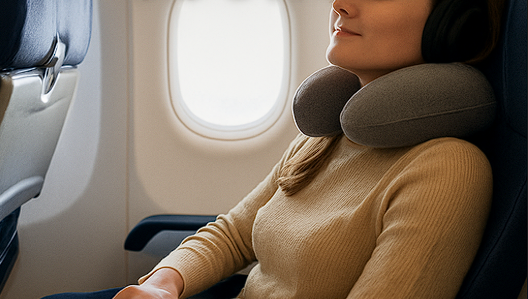
Economy seats are not designed for the human spine. To avoid the dreaded lower-back ache, don’t rely solely on the provided pillow. Use a small travel pillow or even a rolled-up sweater placed exactly in the small of your back (the lumbar curve).
Additionally, wear graduated compression socks. These aren’t just for medical conditions; they prevent blood from pooling in your lower legs, reducing swelling and significantly lowering the risk of Deep Vein Thrombosis (DVT) on flights exceeding eight hours.
6. The Digital Sanctuary Approach
Relying on the in-flight entertainment system is a gamble. Even if it works, the selection is often mediocre. Instead, build a “Digital Sanctuary” on your device.
Beyond movies, download a specific “Sleep Playlist” consisting of brown noise, rain sounds, or low-frequency ambient music. This masks the erratic sounds of the cabin (crying babies, galley chatter) more effectively than standard music. Also, download offline maps of your destination city so you can plan your first day’s movements while still in the air.
7. The “Pre-Landing Refresh” Ritual
The “zombie look” occurs because of accumulated oil, dry skin, and stagnant air. To arrive feeling sharp, perform a full refresh ritual 90 minutes before landing—not 20 minutes.
Use a refreshing face wipe to remove oils, brush your teeth, and change your socks. This psychological reset signals to your brain that the “transit phase” is over and the “destination phase” has begun, which helps you hit the ground running with more energy.
8. Optimized Seating: The Galley Balance
Most people avoid seats near the galley or lavatories to avoid noise. However, if you are a frequent mover or need easy access to water, the second-to-last row is often a secret weapon. You have quicker access to the restroom and flight attendants, but you aren’t directly against the wall where the most noise and foot traffic occur.
9. The Movement Micro-Routine
You don’t need to walk the aisles every hour to stay healthy. Instead, perform “Micro-Movements” in your seat every 60 minutes to keep circulation flowing:
- Ankle Circles: 10 rotations each way to prevent swelling.
- Seated Spinal Twists: Gently rotate your torso to release tension in the lower back.
- Shoulder Blade Squeezes: Pull your shoulders back and down to counteract the “slouch” of the airplane seat.
How These Insights Were Gathered
The strategies outlined in this guide are not based on generic travel blogs. They are the result of a decade of global exploration, having flown over 1,000 hours across six continents. These hacks have been refined through trial and error—testing everything from various compression gear to nutritional adjustments—to determine what actually improves the passenger experience and what is simply marketing hype.