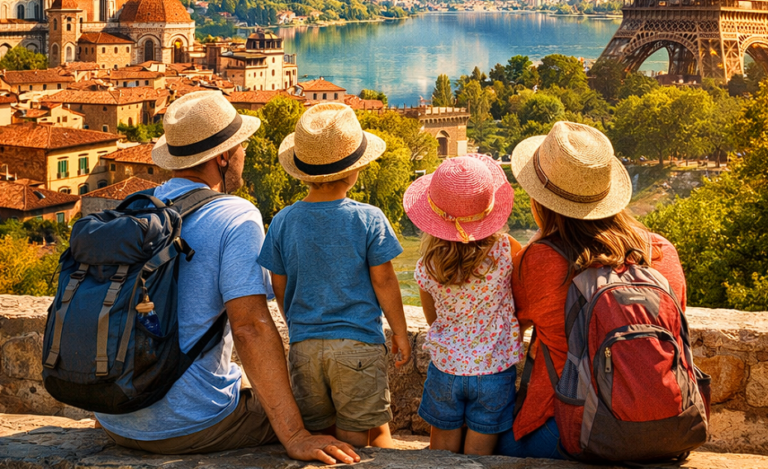

How We Travel with 3 Kids on $1,500
How to Travel with 3 Kids on a $1,500 Budget: A Practical Guide to Intentional Family Adventure
For many parents, the idea of traveling with three children on a $1,500 budget feels like a mathematical impossibility. Between airfare, lodging, and the relentless appetite of growing kids, the costs typically spiral out of control. However, after years of navigating diverse terrains and cultures across the globe with my own family, I’ve learned that the secret isn’t about deprivation—it’s about strategic intentionality.
Traveling on a budget doesn’t mean sacrificing the experience; it means shifting your focus from “luxury consumption” to “authentic exploration.” When you remove the expensive tourist traps, you actually create more space for the memories that matter.
1. The Golden Rule of Budget Travel: Strategic Destination Selection
You cannot apply a $1,500 budget to a trip to Disney World or a cruise in the Caribbean; the math simply doesn’t work for a family of five. To make this budget viable, you must utilize geo-arbitrage—traveling to places where your currency has significantly more purchasing power.
Domestic Options (The Road Trip)
For US-based families, the most cost-effective method is the regional road trip. Focus on National Parks or state forests. Your primary costs become fuel and food, eliminating the massive expense of five plane tickets. Target destinations like the Blue Ridge Mountains, the Great Lakes region, or the Southwest, where nature provides the primary entertainment for free.
International Options (The Value Hubs)
If you choose to fly, look toward regions where the cost of living is a fraction of that in the USA. Destinations like Mexico, Guatemala, Vietnam, or Thailand allow a family of five to live comfortably on a budget that would barely cover a hotel room in New York City. In these locations, a high-quality family dinner often costs less than a fast-food meal in the States.
2. Accommodation: The “Kitchen Rule”
The fastest way to blow a $1,500 budget is by staying in hotels. Hotels not only charge a premium per room (and you’ll likely need two rooms for five people), but they force you to eat out for every meal.
The strategy: Prioritize rentals with kitchens. Whether it’s an Airbnb, a Vrbo, or a budget apartment, having a kitchen is non-negotiable. By preparing breakfast and dinner at “home,” you reduce your food spend by 60-70%.
- House Sitting: Explore platforms that connect homeowners with trusted sitters. This can potentially bring your lodging cost down to zero.
- Camping: For domestic trips, a tent and a sleeping bag are the ultimate budget hacks. National Forest campsites are incredibly affordable and provide kids with an immersive experience.
- Hostel Family Rooms: In Europe or Asia, many high-end hostels offer private family dorms with en-suite bathrooms, combining social atmosphere with privacy.
3. Feeding a Family of Five Without Breaking the Bank
Food is often the “hidden” budget killer. With three children, the cost of appetizers, drinks, and desserts adds up instantly.
The “One-Meal-Out” Strategy: Limit yourself to one restaurant meal per day—usually lunch, when menus are cheaper. For the other two meals, shop at local grocery stores or street markets. This is not just a money-saving tactic; it’s a cultural experience. Visiting a local market in a foreign country teaches children about local produce, currency, and customs far more than a hotel buffet ever could.
Practical Tips:
- Pack High-Protein Snacks: Avoid the “hangry” meltdown that leads to expensive convenience store purchases. Pack nuts, dried fruit, and granola bars.
- Water Filtration: Carry reusable filtered water bottles. Buying bottled water for five people multiple times a day is a waste of money and plastic.
4. Transportation: Efficiency Over Convenience
Transporting five people requires a balance between cost and sanity.
Air Travel: If flying, use tools like Google Flights to track “everywhere” destinations. Fly into a secondary airport (e.g., flying into Oakland instead of San Francisco) and use shuttle services. Avoid checked bags by mastering the “capsule wardrobe” for the kids—layers and versatile pieces that can be mixed and matched.
Local Transit: Once you arrive, avoid taxis and ride-shares. Utilize public buses, trains, or rent a single fuel-efficient vehicle. In many international cities, walking is the best way to see the sights and costs nothing.
5. Entertainment: Low-Cost, High-Value Activities
Kids don’t need expensive theme parks to be entertained; they need engagement. The most memorable parts of travel for children are often the simplest.
- The “Free Tour” Method: Many cities offer “Free Walking Tours” where you only tip the guide at the end.
- Nature as a Playground: Beaches, hiking trails, and public parks are free. A scavenger hunt in a local park is often more exciting for a 7-year-old than a curated museum tour.
- Local Festivals: Research local community events. Small-town fairs, street performances, and holiday markets provide authentic cultural immersion for free or very low cost.
Budget Breakdown Example: 10-Day Regional Road Trip
To visualize how $1,500 works for a family of five, here is a hypothetical breakdown for a domestic nature-based trip:
| Category | Estimated Cost | Strategy |
|---|---|---|
| Fuel/Transport | $300 | Fuel-efficient vehicle, optimized route. |
| Lodging | $500 | Mix of campsites ($30/night) and budget Airbnbs. |
| Food/Groceries | $500 | 90% home-cooked, local markets, bulk snacks. |
| Activities | $200 | National Park passes, free museums, hiking. |
| Total | $1,500 |
Closing Thoughts: The Value of the “Budget Constraint”
Traveling with a strict budget isn’t just a financial necessity; it’s a pedagogical tool. When we travel lean, we teach our children resilience, creativity, and the ability to find joy in the journey rather than the destination. They learn that a picnic on a cliffside is more valuable than a meal in a five-star restaurant.
How these insights were gathered: The strategies outlined in this guide are the result of over a decade of global travel with a growing family. These methods have been stress-tested across multiple continents, from the budget-friendly streets of Southeast Asia to the vast National Parks of the American West, combining real-world expense tracking with a philosophy of slow, intentional travel.